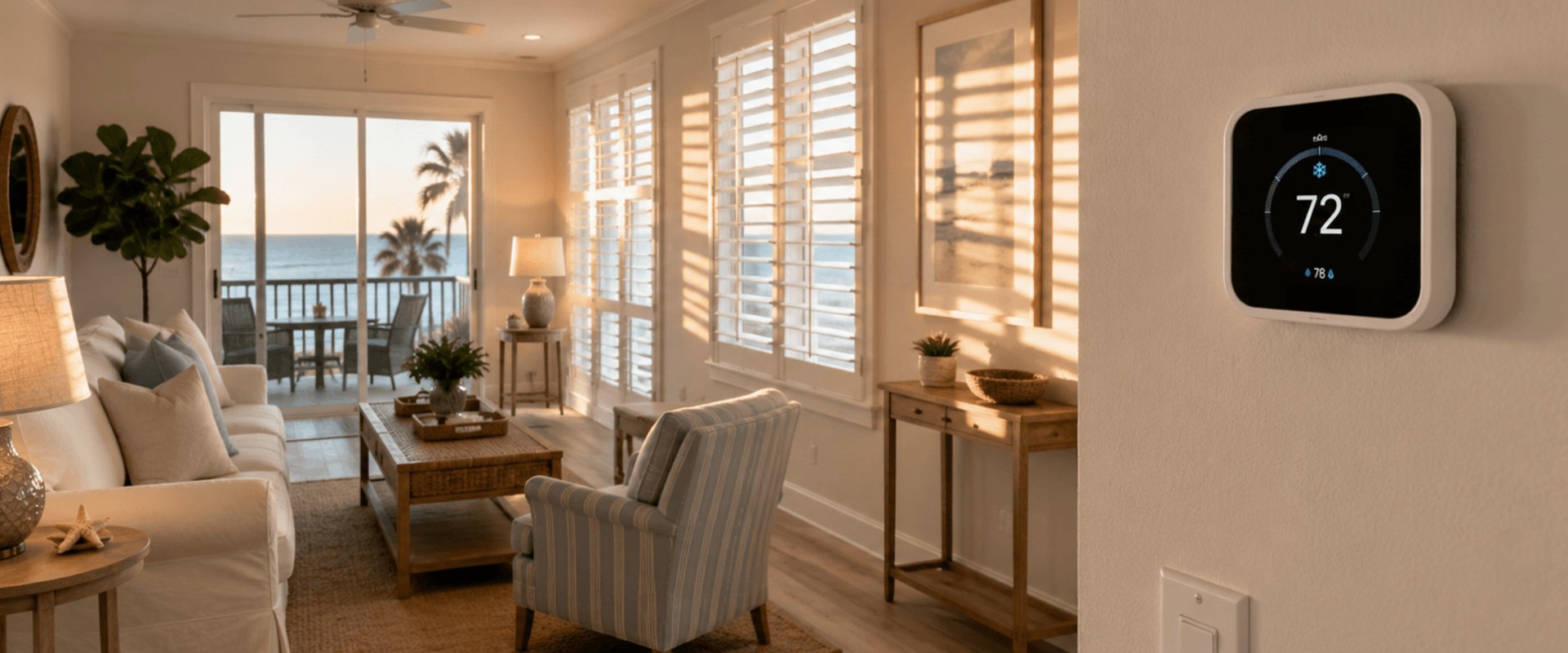
How to Reduce Your Vacation Rental Electric Bill in 2026
An empty vacation rental still runs up a cooling bill, and in a humid climate you cannot switch the system off to stop it. My first summer with a house on Florida's Gulf Coast, a July statement for a property empty nineteen of thirty-one nights beat the month it was booked solid. Here is what cuts that cost, and where the usual advice stops working.
TL;DR Quick Answers
How Do You Reduce Your Electric Bill in 2026 When a Vacation Rental Sits Empty?
Set the thermostat to 78 to 80 degrees between guests rather than switching the system off, hold relative humidity under 60 percent, change the filter at every turnover, seal accessible attic ducts, and cap how low arriving guests can set the temperature.
Top Takeaways
- Vacancy is not free. A closed house in a humid climate still needs runtime to pull moisture out of the air.
- Humidity is the target, not temperature. EPA guidance is below 60 percent, ideally 30 to 50 percent.
- Raise the setpoint, never switch off. Shutting down saves money and risks a moisture bill that dwarfs it.
- Airflow is the cheapest fix. A loaded air filter makes the system run longer for the same result.
- Check the occupied side too. Guest behavior can cost more than vacancy, and a capped setpoint range solves it.
Why an Empty House Still Runs the Air Conditioner
An air conditioner removes moisture as well as heat, so a closed house needs runtime even with nobody inside. I learned that the expensive way. I killed the system for a nine-day gap between bookings, the bill dropped, and I came back to a house reading seventy-nine degrees that still felt like a boat cabin, with a sourness in the linen closet that took two weeks of runtime to clear. Nothing visibly grew. It was close enough that I have not done it since. EPA guidance on mold and moisture confirms the mechanism: humidity climbs quickly in a building where the system has been switched off, and moisture problems follow.
The Setpoint That Actually Saves Money
Between guests, 78 to 80 degrees is the range that cuts runtime while still drying the house. On the properties I watch most closely, that single change moved the bill more than anything else on this list.
A smaller gap between indoor and outdoor temperature means less heat pushing in, so the system cycles less. What I do not do is push past 80. Above that, the compressor stops running long enough to dehumidify, and the house starts to smell closed-up even though the temperature reads fine. Eighty is a runtime floor, not a comfort number. If your equipment has a humidity setpoint, use it: told to hold under 60 percent, the system runs when it needs to and stays off when it does not.
Airflow Is the Cheapest Line Item You Control
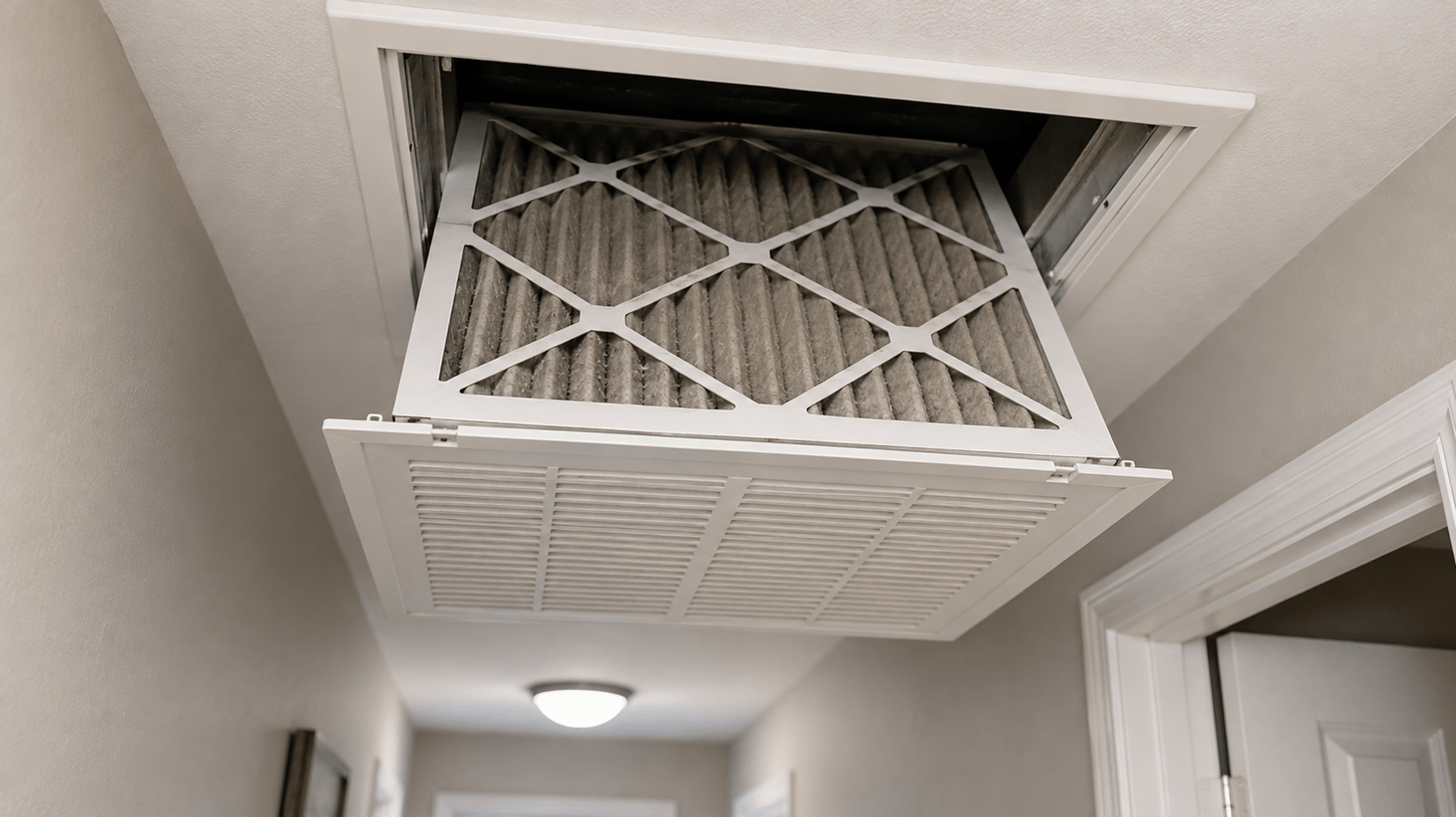
Change the filter at every turnover rather than on a calendar. A loaded filter is the most common thing I find in a rental running hot bills, because guests never change filters and cleaners rarely do unless it is on the list. ENERGY STAR recommends checking monthly during heavy-use months and changing at least every three months, since a dirty filter slows airflow and makes the system work harder for the same result.
On MERV, higher is not automatically better. A denser filter catches more, which matters with pets cycling through weekly, but if the system was never sized for the added resistance, you trade capture for airflow and get longer runtime anyway. The MERV rating chart for air filters covers where that line sits. In older rental stock, I stay at MERV 8 to 11.
Where the Cooled Air Leaks Out
Sealing attic ducts is the one capital item on this list worth paying for. ENERGY STAR puts duct loss in a typical house at 20 to 30 percent of the air moving through the system, with sealing and insulating capable of improving efficiency by as much as 20 percent.
The ducts in these houses look alike: flex sagging across joists, insulation crushed where someone knelt, one boot where the tape gave up. That leak costs a rental twice, since you cool an attic nobody stands in, and the humid attic air pulled through a loose return is the same air you are trying to dry. Know what duct sealing actually involves before you take a quote, and refuse any number produced without someone going into the attic. Have them check the condensate drain while up there, with the system running rather than sitting cold.
When the Setpoint Strategy Stops Working
In mild weather, this whole strategy fails, because an air conditioner only dehumidifies while it runs and only runs when the thermostat calls for cooling. Set an empty house to 80 in a Florida January and the indoor temperature may never climb to 80, so nothing ever starts.
The house sits at 73 degrees, holding whatever moisture the air brought in. A rainy stretch in the mid-70s is worst, warm enough to carry water and cool enough that nothing triggers. I have opened houses in February that felt damper than the same house in August.
Those months need another tool. A dehumidifier on a humidistat works on moisture directly, whatever the temperature does. Some systems offer a dehumidify-on-demand mode that runs the compressor to a humidity target even when temperature is satisfied, worth asking your installer about by name. Plumb any portable unit to a drain line, because a bucket fills, shuts the unit off, and leaves an open pan of water in a closed room.
The Half of the Bill Nobody Mentions
If your bill is high and your calendar is full, vacancy is not your problem. Occupied cooling in a rental behaves unlike cooling in a home for one structural reason: the person setting the thermostat is not the person paying for it.
What I see is 68 degrees held for a week, sliding doors open while the system runs, and the thermostat pushed to its coldest setting on arrival in the belief it cools faster, which it does not. The fix is a setpoint limit, not a conversation. Most connected thermostats let you cap the low end so 70 or 72 becomes the floor instead of 64. Set it before the season and say so once in the welcome guide.
To find out which problem you have, put a mostly-empty month and a mostly-booked month with similar weather side by side. Close together means your vacancy setting is the cost. A much higher booked month means guest behavior is, and a capped range beats anything in the attic.
“Across the seasonal rental properties we field calls on, vacancy cooling produces fewer and longer cycles, which is why an owner can pull a filter that looks clean at ninety days while the coil is doing all the work. We tell rental owners to change on the turnover schedule rather than on appearance, because in these houses the filter's look is the least reliable signal available.” - The Filterbuy Team
5 Essential Resources
1. Learn Here How to Reduce Your Electric Bill in 2026 (Filterbuy). The 2026 rate picture state by state, plus the airflow and thermostat fixes that apply to any house rather than only a rental.
2. Heat and Cool Efficiently (ENERGY STAR). Filter intervals, plus the share of home energy that goes to heating and cooling.
3. Duct Sealing (ENERGY STAR). Duct loss figures and how to judge sealing yourself against hiring a contractor.
4. Residential Energy Consumption Survey (U.S. EIA). The primary-residence scope of the dataset, which is why national benchmarks do not fit rentals.
3 Statistics
1. Nearly half of the energy used in a home goes to heating and cooling, according to ENERGY STAR, and in a seasonal rental, that share is almost all cooling.
2. In a typical house, about 20 to 30 percent of the air moving through the duct system escapes before it reaches a room, according to ENERGY STAR. Where those ducts cross an attic, you are cooling the attic.
3. The U.S. EPA recommends keeping indoor relative humidity below 60 percent, ideally 30 to 50 percent. That number, not the thermostat, tells you whether an empty house is safe.
Final Thoughts
Treat vacancy cooling as a preservation cost you can turn down rather than waste you can eliminate. The setpoint and the filter cost nothing to get right. The ducts cost money and repay it.
One thing worth knowing: the datasets everyone quotes do not cover these houses. The 2024 Residential Energy Consumption Survey counts homes occupied as a primary residence, so a house rented by the week is absent. Owners find benchmarks built from full-time households and conclude their bill is broken, when what they have is a different kind of building.
Next Steps
1. Find out which problem you have. Compare a mostly-empty month against a mostly-booked month with similar weather. A much higher booked month sends you to step two, not the attic.
2. Cap the low end of the thermostat. Set a floor of 70 or 72 so a guest can adjust without holding the house at 64. Do it before the season, not after a complaint.
3. Pull the filter and date the next one. No date on the frame means you are guessing. Move it onto the turnover checklist beside linens.
4. Program two setpoints, not one. Guest range for booked nights: 78 to 80; otherwise, three-hour pre-cool before arrival. Drive it from the booking calendar, since geofencing tracks your phone, not the guest's.
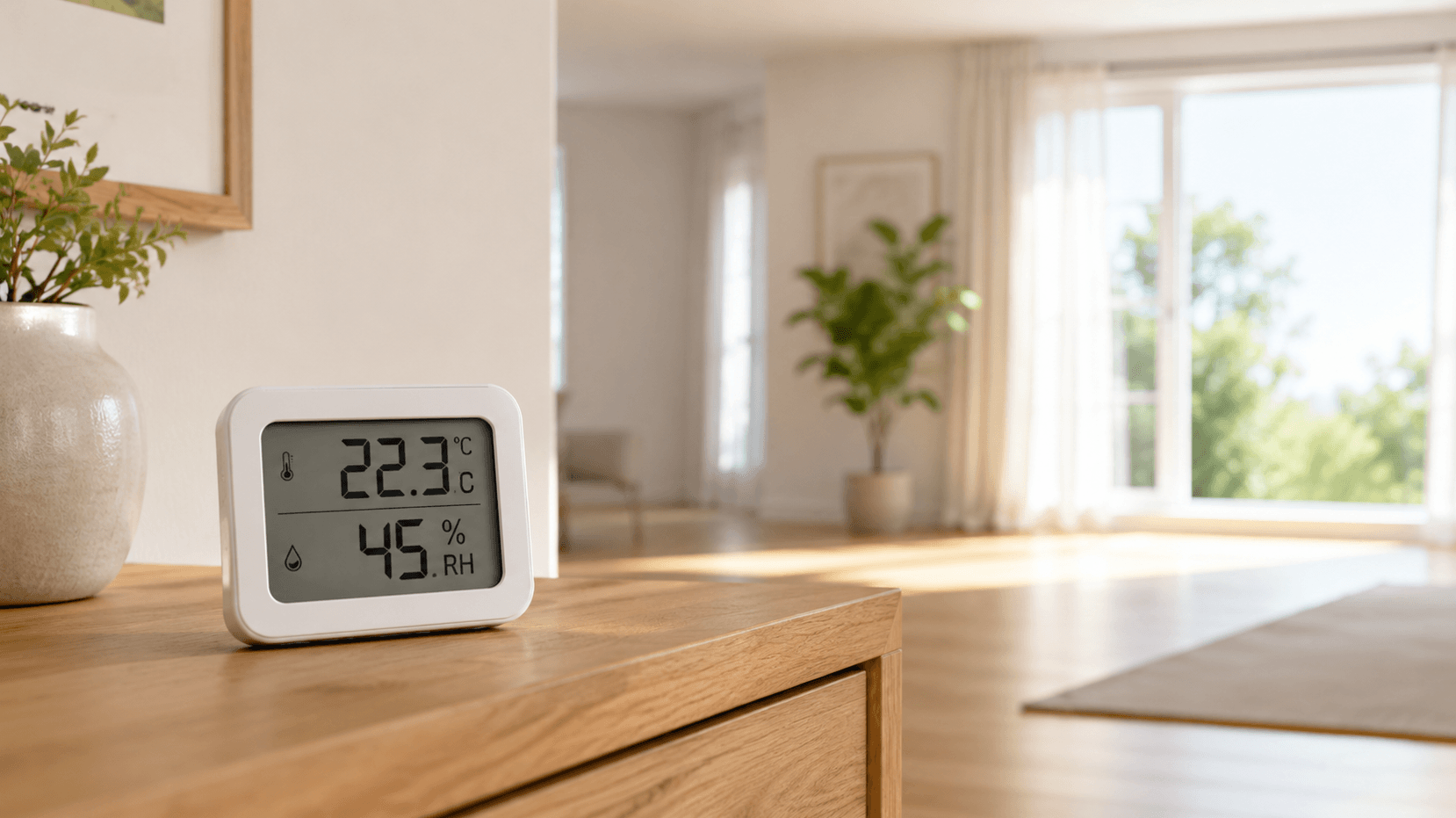
5. Hold humidity under 60 percent. Use the equipment's humidity setpoint, and add a dehumidifier on a humidistat for the mild months when the system will not run.
6. Get eyes on the attic ducts before next season. Ask about accessible seams and insulation on the runs, then read one statement after a full vacancy cycle to set your baseline.
Frequently Asked Questions
Should I Turn the Air Conditioner Off in My Vacation Rental Between Guests?
No, and I tried it so you do not have to. Raise the setpoint instead. The system removes moisture as well as heat, and EPA guidance notes that humidity climbs quickly once it is off. Nine days off cost me two weeks of runtime to undo.
What Temperature Should I Leave the Thermostat at in an Empty Florida House?
Use 78 to 80 degrees. That gap cuts runtime while leaving the compressor on long enough to dehumidify. Past 80, the house feels closed-up even when the temperature reads fine; that's the early signal you have stopped drying it.
Why Does My Empty House Feel Damp in Winter Even Though the Thermostat Reads Fine?
Because the system is not running. Your air conditioner removes moisture only while the compressor is on, and in mild weather the indoor temperature never climbs to your setpoint, so nothing starts. A dehumidifier on a humidistat covers those months.
Should I Lock the Thermostat in My Vacation Rental?
Cap the low end rather than locking it. Most connected thermostats let you set a floor so a guest can adjust within a range but cannot hold the house at 64. If your bills spike in booked months rather than empty ones, this change outperforms everything else here.
Always Stay One Step Ahead
Cooling an empty house is a manageable cost once you treat it as a humidity problem rather than a temperature problem. Set your vacancy setpoint, put a fresh filter in at your next turnover, and compare the number on the statement that follows.
Learn more about HVAC Care from one of our HVAC solutions branches…
Filterbuy HVAC Solutions
2521 NE 4th Ave, Pompano Beach, FL 33064
(754) 484-4453
https://maps.app.goo.gl/JmWkEXya7uzuLzBh8